I will arise and go now . . .

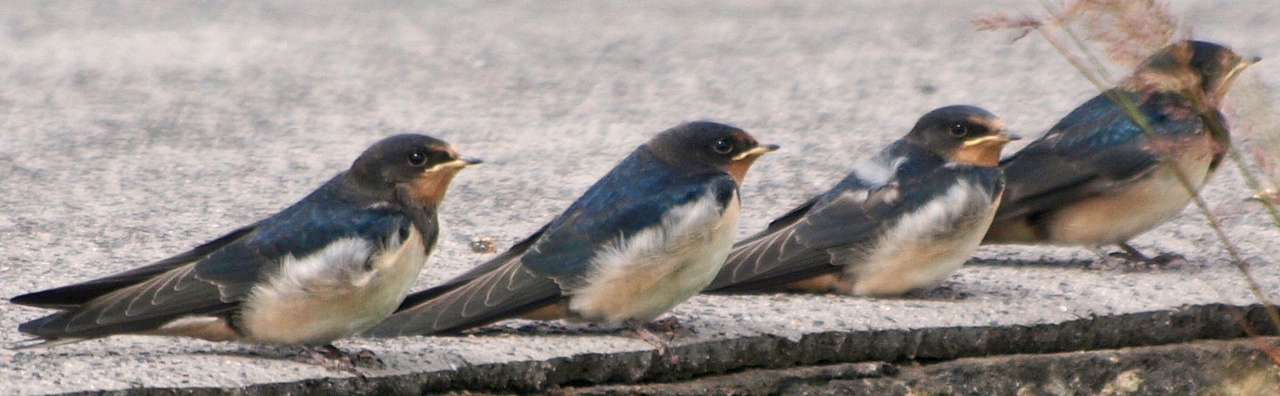
Tree Swallow, Buttercup Farm

Tree Swallow, Buttercup Farm

I will arise and go now, and go to Innisfree,
And a small cabin build there, of clay and wattles made;
Nine bean-rows will I have there, a hive for the honey-bee,
And live alone in the bee-loud glade.

—W. B. Yeats, from The Lake Isle of Innisfree

It’s May, and the weather has turned springlike, though in fits and starts. Local gardens available to the public have begun to open, among them Innisfree. It’s time, then, to arise and take a break from blogging and, to an extent, the internet for a while.

Yeats’s poem, after which the garden is named, is, of course, an act of the imagination by a young poet dreaming about a real Lake Isle of Innisfree, but nonetheless more a place of the imagination than of fact. Innisfree Garden, too, is, in some sense, not a real place, but an act of the imagination, realized by people wealthy enough to do so and, so far at least, to leave enough behind to help fund the garden’s continued existence.

Before I arise and go, I want to leave with you these things:

Innisfree Garden

Innisfree Garden

>>A Poem Talk discussion of Yeats’s poem, with Taije Silverman, ModPo TA Max McKenna, and John Timpane joining Al Filreis, along with links to three recordings of Yeats reading the poem. Yeats provides an introduction to the poem here, in which, among other things, he points to a shop window advertisement as what I would call his own version of Proust’s madeleine:

I am going to begin with a poem of mine called ‘The Lake Isle of Innisfree’ because if you know anything about me you will expect me to begin with it. It is the only poem of mine which is very widely known. When I was a young lad in the town of Sligo I read Thoreau’s essays and wanted to live in a hut on an island in Lough Gill called Innisfree, which means ‘Heather Island.’ I wrote the poem in London when I was about twenty-three. One day in The Strand I hear a little tinkle of water and saw in a shop window a little jet of water balancing on the top. It was an advertisement, I think, for cooling drinks. But it set me thinking of Sligo and lake water. I think there is only only obscurity in the poem. I speak of noon as a ’purple glow.’ I must have meant by that the reflection of heather in the water. [transcription provided by Jacket2 here]

Dogwood

Dogwood

>>Photographs ranging from a family of foxes and the dogwood tree in bloom in our front yard to scenes from local walking places, including Buttercup Farm and, of course, Innisfree Garden.

>>As always, a listening list.

Innisfree Garden

Innisfree Garden

I hope you’ll enjoy what you find here while I’m offline. I will respond to any comments that might be left here (though my response may be delayed), and I’ll look forward to coming back and visiting with you in a while.

This slideshow requires JavaScript.

Listening Lists

Here are four Spotify playlists of music I’ve been exploring recently:

May Selections 1 (British Composers Benjamin Britten, Oliver Knussen, and James MacMillan)

May Selections 2 (Carl Nielson (Danish), Glière (Ukrainian), Josef Suk (Czeck))

May Selections 3 (Rued Langgaard (Danish), Giya Kancheli (Georgian), Rolf Martinsson (Swedish), Uuno Klami (Finnish))

May Selections 4 (Sofia Gubaidulina (Russian), Magnus Lindberg (Finnish), Kaija Saariaho (Finnish), Gérard Grisey (French))

A YouTube selection is below:

Britten’s Serenade for Tenor, Horn, and Strings (part 1 of 2)

Glière’s Ilya Muromets: Symphony No. 3, Op. 42

Langgaard’s Music of the Spheres

Gubaidulina’s Viola Concerto (part 1)

<<<>>>

Credits: All photographs are mine, as always unless otherwise noted on the blog. The source for each quotation may be found at the link noted in the text.

This Life in Music: Percussionist Amy Garapic

Percussionist Amy Garapic (photograph by Gordon Hayes)

Percussionist Amy Garapic (photograph by Gordon Hayes)

The picture I used to carry in my head of a percussionist was a guy (and it was always a guy) at the back of an orchestra, in partial view at best, standing around until it was his turn to ding on a triangle or beat a huge drum. Well, no more. These days, I picture a hugely talented and energetic woman, leaping from marimba to cymbals to car parts, to create a sonic phantasmagoria with skill and zeal. Her name is Amy Garapic, and I’m delighted to present her on Prufrock’s Dilemma.

Q: When did music first come into your life? Can you tell us about an early musical memory that has significance for you today?

Music was always a constant part of my home as a kid. My mother often played holiday and musical tunes on the piano, and my parents always had music playing on the stereo ranging from Jazz, Blues, Hard Rock, Funk, and Folk. Classical music didn’t make much of an appearance, but Paul Simon, the Allman Brothers, Chick Corea, Stevie Ray Vaughn, and the Beach Boys (among so many more!) were constants in our household depending on the season, occasion, holiday, etc.

I began taking piano lessons in second grade after teaching myself from a friend’s piano books, though I didn’t invest much time in it. I could play by ear pretty easily and memorized music quickly, but admittedly couldn’t read very well and lost interest after only a couple of years as my sports life got busier. Percussion came much later in middle school, again after learning from a good friend who was playing the drums. After begging the school to let me join percussion late in the game, I was of course placed on the “xylophone and bells” section in band, as I was the only student who could read the notes. I wasn’t even allowed to touch the drums, but during that time a teacher of mine gave me a CD of music that was unlike anything I had heard and was a big inspiration: Leigh Howard Steven’s Marimba When. A full record of classical music on the marimba including Debussy, Tchaikovsky, Schumann, and Khachaturian, this record exposed me to both a new genre of music as well as an entirely new sound world. I quickly became obsessed with the lyricism in the music and warmth of the marimba’s tone and distinctly remember listening to it on repeat before track meets and travel soccer games to try to calm my nerves. This inevitably led to my desire to learn to play the marimba, as well as the rest of the percussion gamut in high school.

It’s worth noting that throughout those years I was also conflicted and sometimes embarrassed about my involvement in music, as it was very much the “uncool” thing to do at my school . . . especially to all of my sports friends! But soon enough, I traded in my Varsity soccer jersey and option to be team captain for a marching band uniform and title of Band President/center snare. I realize how nerdy all of this sounds (it’s actually strangely fascinating to think back and see how so much has changed), but these were big turning points in my life.

Q: At a concert I attended some time back, So Percussion’s Jason Treuting displayed some of the percussion instruments he would be using. They ranged all over the lot—I think an old bicycle wheel was one. I had the sense Treuting listens for new sounds everywhere he goes. I know the search for new and different sounds isn’t specific to percussionists (composers Harry Partch, John Luther Adams, and Magnus Lindberg come to mind), but I began to wonder whether there might be something unique about the way percussionists listen to sounds. How do you, as a percussionist, listen to the world? 

First I’ll start by saying that John Luther Adams is indeed a percussionist! Most know him as a composer, but percussion is in his roots. As for me, I often find myself hyper-aware of everyday sounds that aren’t necessarily tied to music . . . yet! It is not unlikely that the phrase “wow, that’s a cool sound!” will come out of my mouth, only to be looked upon strangely by my nonmusical or non-percussion friends. This is also true with naturally occurring rhythms, especially in electronic devices. A dishwasher, copy machine, or skipping CD player all have ways of producing extremely interesting and unpredictable rhythmic patterns and harmonic grumblings.

Interesting, unique, and quirky sounds are at the heart of the music that I love to play and love to listen to. Even more so if they are everyday objects turned “unconventional instruments.” I’m constantly on the hunt for new instruments, but more often at a thrift store or flea market than at an actual drum shop. This has both to do with finding unique sounds to support my own voice, as well as trying to be efficient with money and space concerns. Percussion instruments are many, large, and expensive to say the least—three things that make my life much more difficult as a poor musician. One way to combat this triple threat is to be inventive about “standard” instrument alternatives and to encourage composers to think outside of the box with you. I certainly can’t replace instruments in pieces that have already been written, but I can create a repertoire to fit the instruments that I have acquired or built.

Q: Would you name for us a figure in music you particularly admire and tell us a little about why?

From a performance of John Cage's Branches with So Percussion

From a performance of John Cage’s Branches with So Percussion

Of all figures in music, John Cage is surely a huge inspiration to me. His writings and interviews on sound, music, silence, and philosophy have and continue to change the way that people experience sounds in life. When you hear him speak about music it is clear that his thoughts and feelings are incredibly genuine and all his own. A favorite Cage quote of mine can be found within this interview taken from a documentary film. He says “I love sounds. Just as they are. And I have no need for them to be anything more than what they are.” These ideas have surely influenced my own thoughts on sound and music and continually inspire me to think outside the box of what might be considered mainstream or normal in order to be open to the new and adventurous.

Q: In early 2012, you and percussionists Matt Evans and Carson Moody formed the percussion ensemble TIGUE. How did you three “find” one another and what led you to create TIGUE?

Matt, Carson, and I have a unique story that dates back to The Ohio State University in 2006. We all met in our undergrad there and connected quite quickly along with another colleague of ours, Nathaniel Hartman (who played on the Clunker Concerto with us recently). The three of them actually formed a quartet with another student when they were freshman, but when that person left music they asked me to fill in. We immediately clicked as a quartet and became best friends, spending many hours late into the night at their apartment listening to music of all sorts while lamenting and celebrating college life. In 2009 we curated our first concert as a quartet in an art gallery in Columbus and soon after attended the first So Percussion Summer Institute together. Both of those experiences were really special to us, and I think we all knew that we would be making music together for many years to come. There was a bit of a hiatus as we were all living in separate cities when I left to attend Eastman in 2009, and Nathaniel also began to focus a lot of his time on visual art and technology staying at OSU to do his MFA. Through that, we still played together on each other’s recitals and tried to find opportunities to make music as much as we could, but it was never as dedicated as we wanted it to be. Once Matt and Carson found their way to New York, a trio was born in hopes of commissioning a composer that we came to know and love, Robert Honstein. Strangely enough, Matt and Carson also followed suit, attending ESM in consecutive years after I left, and we have been doing dances all around New York City, Bard, and ESM for the last couple of years trying to make things work. Through our project with Rob, Matt, Carson, and I decided to direct our musical endeavors through a trio and settled on the name TIGUE.

Thankfully this coming year, for the first time since 2009, we’ll all be living in the same city! We’re excited to spend time cultivating our musical voice as a band writing our own music, and to continue to work with composers and other collaborators to make great art together. I’m extremely lucky to have found them as both friends and musical partners in crime, and we look forward to bringing Nathaniel back into the mix soon!

Q: TIGUE recently joined forces with Contemporaneous to perform Sean Friar’s Clunker Concerto, a composition that makes ingenious use of junkyard car parts. What was it like to perform that piece? What were the challenges, and what made it fun?

Performing the Clunker Concerto was a really fun and unique experience for many reasons! First, it is always exciting to play under David Bloom with Contemporaneous, but what made this concert even more special was the opportunity to play alongside some very special friends of mine, Maria Finkelmeier and Nathaniel Hartman, with whom I haven’t been able to perform in quite a long time. All of us have a long history together as OSU alums, and Maria actually went to Eastman just before I got there. It felt like the old gang was back together again and provided more fun than we could have bargained for!

We also had the opportunity to share the music with students from Public School 142 in New York City through an afternoon of outreach sessions. It’s always a joy to expose young children to new music, as they have very few inhibitions about what is acceptable and what is not. We did a bit of a musical show-and-tell as they tried to guess what our instruments were (car fender, spring, wheel, hub cap, etc.), and it was a lot of fun on both ends.

The piece itself was a really unique experience both to learn and perform, but doesn’t fall too far from what we as percussionists are doing on a regular basis: solving problems. One of the biggest challenges for us was simply logistics of the instruments themselves that we were using. A large part of the piece for me was spent pretending to be a cellist bowing a car fender. Sean Friar had marked where to touch and bow the instrument in order to create different pitches; unfortunately, we weren’t able to have the instruments for a long time, so it was a bit of a crash course in fender-cello playing. I found myself in a completely different world contemplating bowing directions, bowing speed, and having to “rub my belly and pat my head” as I attempted to maneuver bowings and fingerings simultaneously.

Q: What drew you to contemporary classical/new music? Is there a particular moment or experience that made you think, “this is for me,” and, if so, can you tell us a little bit about that and where it led you?

Throughout my schooling I’ve been lucky to be exposed to classical orchestral music, world music, fusion, contemporary, and everything in-between. However, aside from a short stint in my undergrad when I was obsessed with orchestral music, contemporary music has always excited and inspired me the most. That inspiration is fueled partly by new composers who are just as excited about new sounds as I am, as well as the sheer urge to discover that next exciting musical idea. As a percussionist, this doesn’t come as much of a surprise, as this music is really the bread and butter of our repertoire. It is important to note that the modern percussion ensemble isn’t even 100 years old, and that the first compositions written for classical marimba didn’t appear until the 1950s. This hardly compares to the violin’s 500+ years of musical existence and can help explain why the names Steve Reich, John Cage, Henry Cowell, Lou Harrison, and Edgar Varèse were hardly foreign to me from the beginning of my musical studies. These were and are the compositional pioneers who paved the path for percussionists today.

I’ll never forget the first time I heard Steve Reich’s marimba duo Nagoya Marimbas when I was in high school. I was fascinated by the simplicity of the process yet dumbfounded by the interlocking rhythms and conversation that were created a result. Some of my most memorable musical moments have come from performing and meditating on Reich’s music, including 3 full performances of his monumental work for percussion, Drumming, as well as Music for 18 Musicians. Performing Reich is a meditative trance-inducing experience, though incredibly nerve wracking as well! It requires an immense amount of concentration and precision, though there are moments when you might be playing the same short sequence over and over for twenty minutes or longer. I find that I am truly present mentally when playing his music, and it is a fun exercise to see how far I can stretch my brain as I try to identify the different conversations of the interweaving lines during those long moments of repetition.  This type of minimalist music has always intrigued me and has led me to seek out other minimalist-like composers such as David Lang, Michael Gordon, Julia Wolfe, John Luther Adams, and Tristan Perich.

Q: Do you have any suggestions for listening for those who’d like to embark on an exploration of new music but aren’t sure where to start, and can you talk a bit about your recommendations?

George Crumb’s Makrokosmos III. Music for a Summer Evening

This is a piece that I have been in love with for a long time, but have not yet performed. Written for two pianos and two percussionists, the score is painted with an abundance of unusual colors and timbres including an extremely eerie slide whistle solo played into the piano in the second movement. The music breathes and is very visceral as it takes the listener into nature’s beauty and darkness, eventually ascending to a higher existence in the fifth and final movement. That last movement is one that I could listen to over, and over, and over . . .

John Luther Adams’s Four Thousand Holes 

Garapic in a performance of John Luther Adams's Inuksuit in Morningside Park in NYC

Garapic in a performance of John Luther Adams’s Inuksuit in Morningside Park in NYC

John Luther Adams has quickly become one of my favorite composers. I’ve been fortunate to be a part of a small team of percussion junkies that have helped produce and direct his Inuksuit  (for 9-99 percussionists) both in live performance and in a 4.0 stereo recording releasing soon! This half-hour long work for piano, percussion, and electronics has very recently become a huge favorite of mine. The first time I sat down to listen to the piece I was completely blown away by the striking energy of its extreme rhythmic complexity and also fell in love with its moments of starkness that fall in between. This music is full of so many coexisting juxtapositions for me in that it is simple yet intricate, beautiful yet frightening, sparse yet lush, emotional yet mundane, tense yet relaxed . . . thirty minutes may seem like a long time, but it is entirely worth it to sit and listen in its entirety. I often find myself swept into a swirling euphoric state where my brain is both firing actively in all directions and yet completely still and attentive to the sparkling, shimmering journey that John provides for us.

Q: Given all you’re involved in, I’m not sure exactly when you might have any free time, but when you do, how do you like to spend it?

Two things that I really enjoy doing and try to make time for are bike riding and running. I was actually a pretty serious jock during my childhood and in high school doing gymnastics (10 years), playing soccer (6 years), running track (6 years), and pole vaulting (3 years with state records and awards to my name). Just a few years ago I bought my first road bike, and it has become my companion, especially throughout summer musical travels. I’ve been lucky to play music in some beautiful places on the East coast and have enjoyed exploring those areas on my bike early in the morning or on any off days that I have. Aside from that I enjoy any time that I can spend with good friends cooking, laughing, and scheming new ideas.

<<<>>>

What’s New for Amy Garapic

I’m excited to be moving to New York City in the fall and look forward to all of the great relationships, musical and otherwise, that I will foster while I’m there. Recently I have started a program at Rikers Island Prison called Rhythm on Rikers, teaching hand drum and rhythm lessons to inmates. This is all through the great support of Make Music New York, and we couldn’t be happier with the way things are going. Our ten weeks of lessons will culminate with a big concert on June 21st celebrating the summer solstice with the rest of the city through MMNY festivities. I’ll also be directing a performance of my project Village in Volume in St. Louis at the League of American Orchestra’s National Conference in mid-June, as well as speaking on a couple of their panel discussions. Aside from that, I’ll be working on all things production leading up to another great couple of weeks in New Hampshire with the Chosen Vale International Percussion Festival in July. I’m also excited that TIGUE will be quite busy throughout the summer and fall next year. We look forward to premiering in full our commission from Robert Honstein, An Index of Possibility, in a few weeks on June 13th at JACK in New York City. Additionally, we’ll be playing a set at the historical venue The Stone in August as a part of Ensemble Signal’s “Micro-Sig” series, as well as Blair McMillen’s Rite of Summer Music Festival on Governor’s Island on September 1st, and at the Colorfield Festival in Madison, Wisconsin, the following weekend.

About Amy Garapic

Though young in her career, percussionist Amy Garapic has quickly made a name for herself not only as an energetic performer of contemporary chamber and solo works, but also as an adventurous producer and collaborator of large percussion and community events. She currently serves as percussionist and Co-Executive Director of the emerging new music powerhouse Contemporaneous, and is one-third of the percussion trio TIGUE. A lover of new music, she has been fortunate to perform alongside such visionaries as So Percussion, Ensemble Signal, NEXUS, Bang on a Can’s Asphalt Orchestra, The Eastman Broadband, the Da Capo Chamber Players, and the Wordless Music Orchestra. In the last four years, performances have taken her to the Perkumania Festival in Paris, France; the Festival Internacional Cervantino in Guanajuato, Mexico; The Al-Hussein Cultural Center in Amman, Jordan; and most recently to Chennai, India, performing with the Grammy and Academy award-winning composer and performer A.R. Rahman.

In addition to performing, Garapic has helped produce some of New York City’s most memorable outdoor percussion events alongside Doug Perkins through Make Music New York, including Persephassa on the Lake, Inuksuit in Morningside Park, and Make Music Winter’s Village in Volume of which she is the creator. Most recently, she united over 100 vibraphonists from nine countries in a joint 18-hour live-streamed marathon relay of Erik Satie’s Vexations, referred to by Alex Ross as ” . . . gentle, hypnotic, and a remarkable feat.” (The link for Vexations will take you to Ross’s report. It’s well worth a read, starting with a photograph of Garapic about to ring the “closing bell.”) Additionally, this summer will include the initiation of Rhythm on Rikers, a ten week program of hand drumming lessons with inmates of Rikers Island Prison culminating in a final concert on June 21st.  Garapic also enjoys working as Percussion Teaching Fellow at the Bard College Conservatory, as Production Manager for the Chosen Vale International Percussion Seminar, and as Special Projects Coordinator for both Make Music New York and the Zeltsman Marimba Festival.

This slideshow requires JavaScript.

Listening List

Contemporaneous plays Sean Friar’s Clunker Concerto, with TIGUE on percussion (at ~0:51, David Bloom comes to the podium and the piece begins with Garapic on car fender)

Garapic plays Mirage pour marimba by Yasuo Sueyoshi

TIGUE plays original work Thank You Mr. Z

TIGUE plays original work Untitled 4.18.13

Garapic in a performance of John Mackey's Micro Concerto

Garapic in a performance of John Mackey’s Micro Concerto

Garapic plays Micro Concerto V. Tune in Seven by Steven Mackey

Garapic plays In a Landscape by John Cage

What Makes Music Great?

Composer Benjamin Britten

Composer Benjamin Britten

In London right now, a festival is going on that surveys twentieth century music and takes its theme and title from Alex Ross’s excellent book, The Rest is Noise: Listening to the Twentieth Century. Related to the festival, David Nice has written a fascinating post, The Rest is Tonal, which has spawned a lively discussion about, among many things, the “importance  of introducing new ideas” (innovation), on the one hand, and the “importance of expression,” on the other. I began by writing a comment on that post, but it became too long for that purpose, so what began as a comment there is now a post of its own here. Continue reading

Turbans in Connecticut (and New York)

Sikh Parade P4273472_edited-1The great structure has become a minor house.
No turban walks across the lessened floors.

—Wallace Stevens (The Plain Sense of Things)

Turbans, along with sombreros, appear early on in the poems of Wallace Stevens. At least three poems in Harmonium sport turbans. Here’s The Load of Sugar-Cane:

The going of the glade-boat
Is like water flowing;

Like water flowing
Through the green saw-grass
Under the rainbows;

Under the rainbows
That are like birds,
Turning, bedizened,

While the wind still whistles
As kildeer do,

When they rise
At the red turban
Of the boatman. Continue reading

Spring and All

V1 Header P4212919_edited-1Whan that aprill with his shoures soote
The droghte of march hath perced to the roote,
And bathed every veyne in swich licour
Of which vertu engendred is the flour;

—Chaucer, from The Canterbury Tales, The Prologue

April is the cruellest month, breeding
Lilacs out of the dead land, mixing
Memory and desire, stirring
Dull roots with spring rain.

–T. S. Eliot, from The Waste Land, Part I, The Burial of the Dead

Spring, Part I (Early April, New York City)

In the lobby at 745 Fifth Avenue, there was a fellow playing piano. Moon River, to be exact. What, I wondered, would an alien landing on earth think of that? Inside the building, for which I felt decidedly underdressed in jeans, an old mock turtleneck, and fleece jacket complete with cat hair, were at least three posh galleries. Despite my appearance, I was allowed to enter and roam the halls. Continue reading